
Research Overview
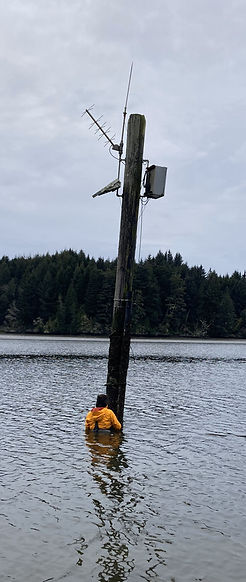

Co-occurrence of pesticides and PPCPs across Zostera marina (common eelgrass) communities
Alexandra G. Tissot, Janet C. Niessner, Elise F. Granek, Kimberly Brown, Michelle L. Hladik
Which pesticides and pharmaceuticals and personal care products (PPCP's) are found in Southern Oregon estuarine habitats?
Abstract: Anthropogenic pressures are driving changes in eelgrass communities, which are altering baseline conditions in estuarine environments. Field detections have validated the transport of land-sourced pollutants to aquatic systems; however, studies rarely sample concurrently for pesticides, and pharmaceuticals and personal care products (PPCPs) across environmental compartments. Moreover, studies on contaminant uptake by eelgrass and associated species are even more limited. In collaboration with the Confederated Tribes of the Coos, Lower Umpqua and Siuslaw Indians (CTCLUSI), this study collected samples of water, eelgrass, clams, and sediment at sites of Tribal significance in Southern Oregon to test for organic contaminants (i.e., herbicides and pharmaceuticals). Paired sampling was conducted for analysis by the CTCLUSI in tandem with the United States Geological Survey (USGS) in order for the Tribe to develop analytical standards for future sampling efforts. Ten pesticides and eight pharmaceuticals were detected across the four sites, with the highest number of overall detections (27) at the Florence Marina site. The insecticide bifenthrin was most frequently detected across all media (0.012–1.565 μg/g organic carbon in sediment, 2.7–30 ng/g in organismal tissue) and the anti-diabetic agent metformin was the most detected PPCP in clam tissues (1.33–3.78 ng/g). Pesticides and PPCPs were observed to co-occur in eelgrass habitats, with numerous pesticide detections across media types. These findings demonstrate numerous routes of exposure for estuarine organisms which could be addressed with pharmaceutical disposal strategies or pesticide use restrictions near these habitats.
The effects of imidacloprid and polyester microfibers on the larval development of the endangered sunflower star
Alexandra G. Tissot, Elise F. Granek, Fiona Curliss, Augustin Kalytiak-Davis, Jason Hodin, Michelle L. Hladik
How do imidacloprid and polyester microfibers affect the larval development of Pycnopodia helianthoides?


Abstract: Sea star wasting syndrome has affected numerous species of sea star, with populations of Pycnopodia helianthoides (Brandt, 1835) left most at risk. As their populations are struggling to recover, it is important to gain a better understanding of the impacts that the multiple stressors in their habitats can have on their populations. Contaminant stressors in particular are of increasing importance, because aquatic organisms can be exposed to a dynamic range of contaminants from nearby anthropogenic activity that may affect their future recovery efforts. This study is the first to quantify the effects of contaminant stressors on the larvae of P. helianthoides. We exposed P. helianthoides larvae to the neonicotinoid insecticide imidacloprid and polyester microfibers, both individually and in combination, at environmentally relevant concentrations (10 ng/L and 25 fibers/L, respectively) to measure the effects of these contaminants on their early life stages. Imidacloprid exposure resulted in stomach malformation in 10% of larvae and increased mortality during early development (p < 0.001), and all treatments resulted in increased larval lengths relative to controls (p < 0.001). During settlement, imidacloprid resulted in more rapid settlement responses than in the controls (p < 0.01). These findings highlight the need for further research investigating the effects of contaminant stressors to endangered organisms during reintroduction as well as a more comprehensive understanding of the effects of pesticides to nontarget organisms.


The Silence of the Clams:
Forestry registered pesticides as multiple stressors on soft-shell clams
Alexandra G. Tissot, Elise F. Granek, Anne W. Thompson, Michelle L. Hladik, Patrick W. Moran, Kaegan Scully-Engelmeyer
How do forestry-registered pesticides affect soft-shell clams individually and in combination on a chronic scale?
Abstract: Contaminants are ubiquitous in the environment, often reaching aquatic systems. Combinations of forestry use pesticides have been detected in both water and aquatic organism tissue samples in coastal systems. Yet, most toxicological studies focus on the effects of these pesticides individually, at high doses, and over acute time periods, which, while key for establishing toxicity and safe limits, are rarely environmentally realistic. We examined chronic (90 days) exposure by the soft-shell clam, Mya arenaria, to environmentally relevant concentrations of four pesticides registered for use in forestry (atrazine, 5 μg/L; hexazinone, 0.3 μg/L; indaziflam, 5 μg/L; and bifenthrin, 1.5 μg/g organic carbon (OC)). Pesticides were tested individually and in combination, except bifenthrin, which was tested only in combination with the other three. We measured shell growth and condition index every 30 days, as well as feeding rates, mortality, and chemical concentrations in tissue from a subset of clams at the end of the experiment to measure contaminant uptake. Indaziflam caused a high mortality rate (max. 36%), followed by atrazine (max. 27%), both individually as well as in combination with other pesticides. Additionally, indaziflam concentrations in tissue (61.70–152.56 ng/g) were higher than those of atrazine (26.48–48.56 ng/g), despite equal dosing concentrations, indicating higher tissue accumulation. Furthermore, clams exposed to indaziflam and hexazinone experienced reduced condition index and clearance rates individually and in combination with other compounds; however, the two combined did not result in significant mortality. These two compounds, even at environmentally relevant concentrations, affected a non-target organism and, in the case of the herbicide indaziflam, accumulated in clam tissue and appeared more toxic than other tested pesticides. These findings underscore the need for more comprehensive studies combining multiple compounds at relevant concentrations to understand their impacts on aquatic ecosystems.
Combined effects of temperature and hypoxia shape female brooding behaviors and the early ontogeny
of the Chilean kelp crab Taliepus dentatus
Simone Baldanzi, Daniela Storch, Marco Fusi, Nicolas Weidberg, Alexandra Tissot, Sergio A. Navarrete, Miriam Fernández
How do hypoxia and temperature affect maternal investment in a Chilean kelp crab?


Abstract: The ecophysiology of marine ectotherms is regulated by the interaction of temperature with environmental drivers, such as dissolved oxygen (DO). The combination of low levels of DO and temperature in the ocean affects physiological and behavioral responses, especially in early life history traits of marine species. Here, we aimed to investigate the combined effect of ecologically relevant values of temperature and DO on female brooding behavior as well as on the early ontogeny of the Chilean kelp crab Taliepus dentatus. In a laboratory experiment, after acclimation and mating of females and males in constant temperatures (11 or 14°C), we exposed brooding females to 1 of 2 temperatures (11 or 14°C) and 1 of 2 DO levels (normoxia or cycling hypoxia). We tested the effects of these 4 treatments on embryo and larval sizes, embryo developmental time, female brooding behavior (i.e. embryo ventilation), larval hatching (i.e. number of hatched larvae), Zoea 1 survival to starvation, and swimming speed. We found a negative effect of temperature on the size of early embryos, but no interactions were detected in embryo size during development. High temperature and low DO increased female brooding behavior and larval size, reduced the number of hatched larvae, and affected larval swimming speed. Embryo development time and larval survival were negatively affected by temperature. These results suggest that an increasing frequency of hypoxic events, combined with ocean warming, might have important consequences on marine invertebrate brooders, affecting female fecundity, larval performance and, potentially, their dispersal ability even well within their optimal thermal range.

Conferences
Inclusivity Advocacy in STEM


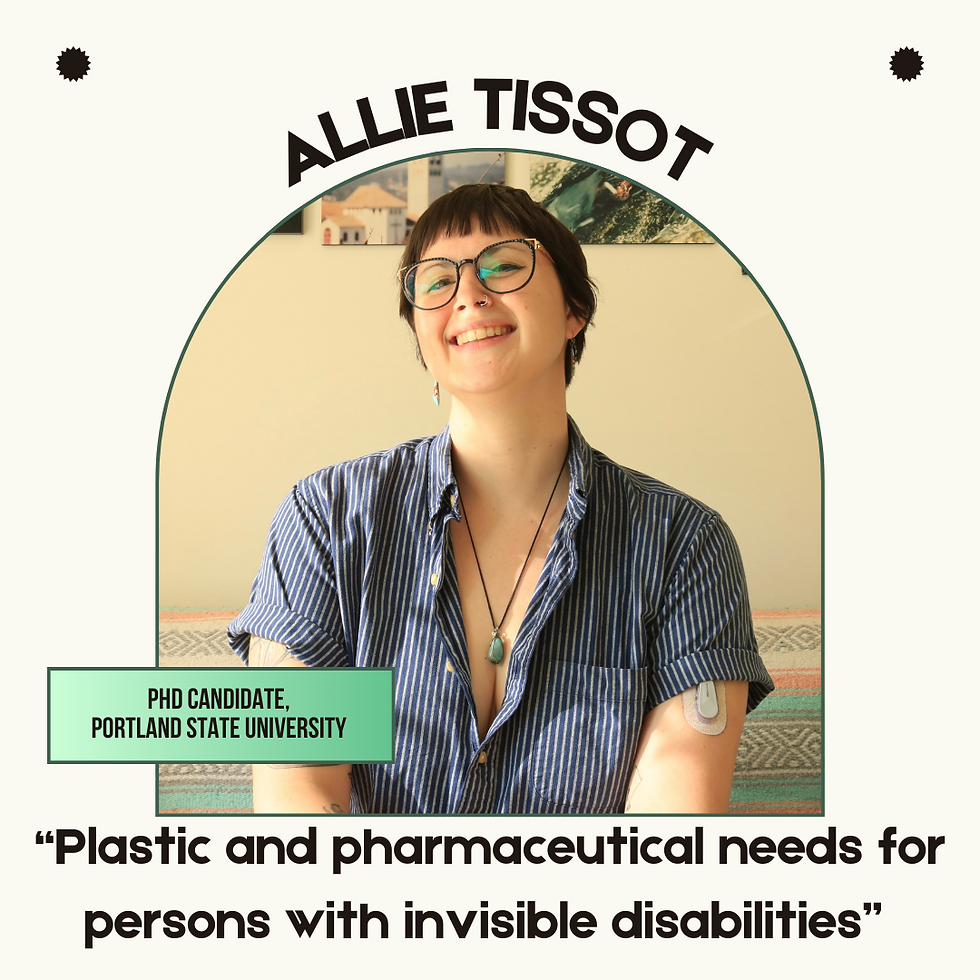
Inclusive Perspectives on Contaminant Solutions Panel
Society of Environmental Toxicology and Chemistry PNW, 2024
Abstract: As a toxicology community, we work to quantify the distribution in and effects of numerous anthropogenic contaminants on humans and the environment. Building on this important research, we take the next step by engaging in ongoing discussions about solutions for many of these issues. However many of the commonly proposed solutions exclude people with marginalized identities, including individuals with disabilities, those who are low income, and from marginalized communities. This panel aims to highlight some of the barriers that marginalized populations face in reducing their use of contaminants, including plastics and pharmaceuticals. The session will comprise a panel presentations and group discussions surrounding such themes as racial inequities, economic barriers, and disability needs.

Affinity Groups - Persons with Disabilities Host
Coastal and Estuarine Research Federation, 2023
Vision Statement: At CERF 2023, we envision a diverse and inclusive environment where all attendees, regardless of their backgrounds, experiences, or identities, can find a sense of belonging, empowerment, and connection. Our Affinity Groups - catering to Persons with Disabilities, Black, Indigenous, and People of Color, and LGBTQ+ people - are an integral part of this vision.
Conference Presentations
Society of Environmental Toxicology and Chemistry (2020-Present)
-
2025 (North America) Session Chair: "Pesticides as Multiple Stressors"
-
Presenter: "Co-Occurrence of Pesticides and PPCPs Across Zostera marina (Common Eelgrass) Communities"
-
-
2024 (PNW) Presenter: “A Tale of Two Estuaries: Environmental detections of human-use contaminants across estuarine Zostera marina communities”
-
Co-organizer: “Inclusive Perspective on Contaminant Solutions” Tissot, A.G., Pouncil, M., Niessner, J., Siddiqui, S., Brown, N, Granek. E.F.
-
Panelist: “Plastic and pharmaceutical needs for persons with invisible disabilities”
-
-
-
2023 (PNW) Presenter: “Pyc-no Poison: The effects of imidacloprid and polyester microfibers on the larval development and juvenile settlement of the sunflower sea star”
-
2021 (North America) Presenter: “The Silence of the Clams: Forestry Registered Pesticides as Multiple Stressors on Soft-Shell Clams”
-
2021 (PNW) Presenter: “The Silence of the Clams: The Sub-lethal Effects of Environmentally Relevant Concentrations of Forestry Use Pesticides on Adult Soft Shell Clams”
-
Award: 1st Place Presentation Award, Thunder PhD Category
-


Western Society of Naturalists
(2015-2025)
-
2024 Presenter “Hard to Stomach: The effects of imidacloprid and polyester microfibers on the development of sunflower star larvae”
-
2020 Presenter “Clamity: The Silent Victims of Forestry Use Pesticides”
-
2015 Poster co-author and presenter: "Assessing the competitive relationship between yellow tangs and brown surgeonfish with changes in depth"

Volunteering
Friends of Netarts WEBS
Volunteer Educator
2021-Present


Saturday Academy
Apprenticeship in Science and Engineering Program Mentor
2020-2023


Lower Columbia Estuary Partnership
East Fork Lewis River Reconnection Project Aquatic Salvage Volunteer
2025
